Internet of Things – IoT

Don’t fear the new paradigm 4.0
April 14, 2018
Get to know a Smart City
May 16, 2018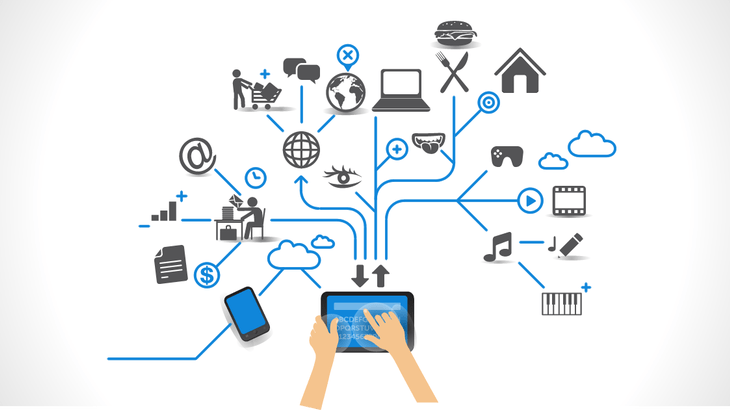
Robots, smart cities, powerful mobile devices that process data in huge quantities … all these science fiction things with which we once imagined the future, now describe the Digital Age we live in. The future seems to already be part of our lives!
The origin of Internet of Things
“Smart” technology was used for the first time at the beginning of the century, when mobile phones connected to the internet; “smartphones” being powerful pocket computers. The challenge has been to connect more people in less time. Today the challenge has transformed to another one: to connect the things that people use to the internet and communicated between each other without human intervention – “Internet of Things” (IoT) appeared.
The term was first proposed in 1999 by Kevin Ashton at an MIT research center. The first way to apply this concept was referred to connecting machines and devices to each other to exchange information and coordinate their functions, model that was called “M2M” (Machine to Machine). Now, Internet of Things seeks to incorporate this technology not only to electronic devices, but also to any object of daily use.
So, what is Internet of Things – IoT? What is it for? How much is IoT being used? And, why is it being so revolutionary? Here are some of the answers:
What is IoT then?
It is “the digital interconnection of everyday objects with the Internet”, as Conner, Margery defines it in “Sensors empower the Internet of Things “. It is about incorporating the internet connection to all types of devices and objects. The objects connect to the network through low-power radio signals that do not need WiFi or Bluetooth.
What for?
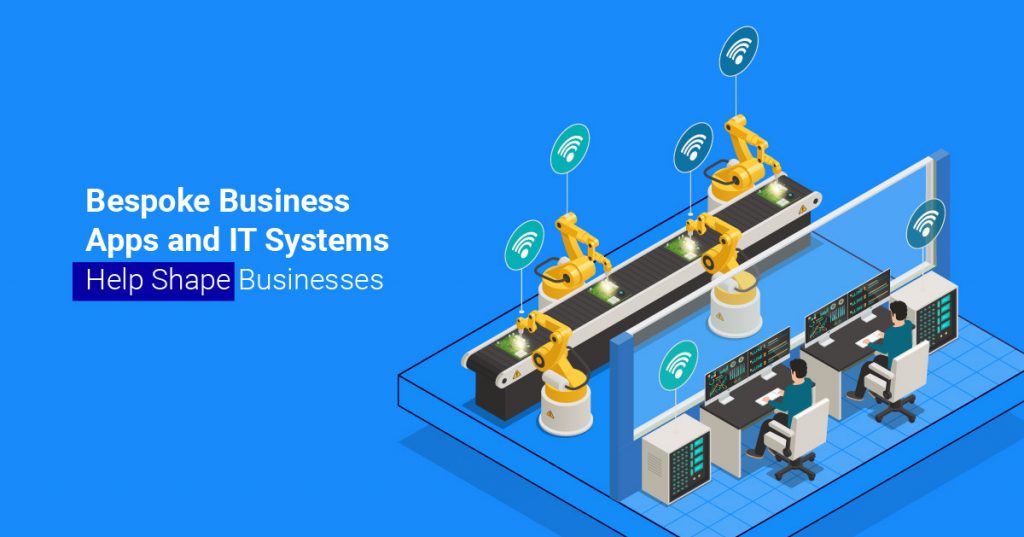
IoT allows the devices to work in an “Intelligent” way, when exchanging information on the web and through sensors they respond automatically and enact their task, avoiding excess energy, as well as reducing efforts of people in their daily activities. IoT has allowed automated control of factories, businesses, homes, etc. Now entire operations can be automated, managed entirely through digital systems. For example, a business with intelligent stock control that automatically requests replacements from the supplier when necessary, or a house using sensors regulates lights and curtains according to a predetermined aimed lighting level.
The biggest technology conventions of the world have agreed on defining three main application branches: consumers, business, and infrastructure. Today the Internet of Things (IoT) technology opens new horizons and radically changes the way the world works and its use seems to have no limits.
In addition to being applied by industries in production plants or in logistics sectors for monitoring and tracking, IoT is a technology that can be useful for more everyday issues. From reducing the energy consumption of our homes, caring for the environment, to issues of health and medical care. Installing smart sensors on the walls of older people’s home, like the ones that were recently presented at the Miami technology convention, would allow that person to maintain their independence and privacy without the need to have someone to care for them or move out. These sensors capture any incident that occurs in the room, such as a fall, and alert connected devices, such as a family member’s phone.
Another way to use an IoT device is to install tracking chips that are so small and practical that they can be easily installed on anything of value of which we are interested in keeping an eye on, from a vehicle to the collar of a pet.
How much do we use IoT?
According to Jean-Baptiste Waldner in “Nano-informatique et intelligence ambiante”, every person, every day, is surrounded by an average of between 1,000 and 5,000 objects, counting everything: from the fork he uses to eat a meal, the armchair where he rests, etc. Applying IoT to all the objects that surround us would be equivalent to connecting and coding from 50 to 100,000 million objects. In theory, there would not be out-of-stock items or expired medicines, we would know where everything is, how they are being used. Loss would be a thing of the past and we would know what is on or off at every moment.
Cisco has created a dynamic “connection measurer” that enables to estimate the number of “things” connected from July 2013 to 2020. It is expected that the “smart” objects will scale from representing the 0.6% of the total number of objects in the world, to 2.7%, estimating that also the amount of objects will increase by 25%.
IoT among us
5G networks are expanding globally, there are also other networks that are specifically designed for IoT. SigFox is well advanced in a global roll-out which includes Australia and Argentina. This network is for IoT; it is secure, low energy, low data and much cheaper than mobile networks. Viveo is already developing platforms, Apps, and devices that work with SigFox’s IoT network.
Some of Viveo’s IoT projects will provide leading technology for various industries, including Agriculture, Wineries, Manufacturing, Packaging and Warehousing, Environmental Monitoring, Transport, Smart City, Security and Apps for the home.
These are exciting times!