(English) Get to know a Smart City

Qué es una Smart City
mayo 2, 2018
Todo acerca de Software como un Servicio – SaaS
mayo 16, 2018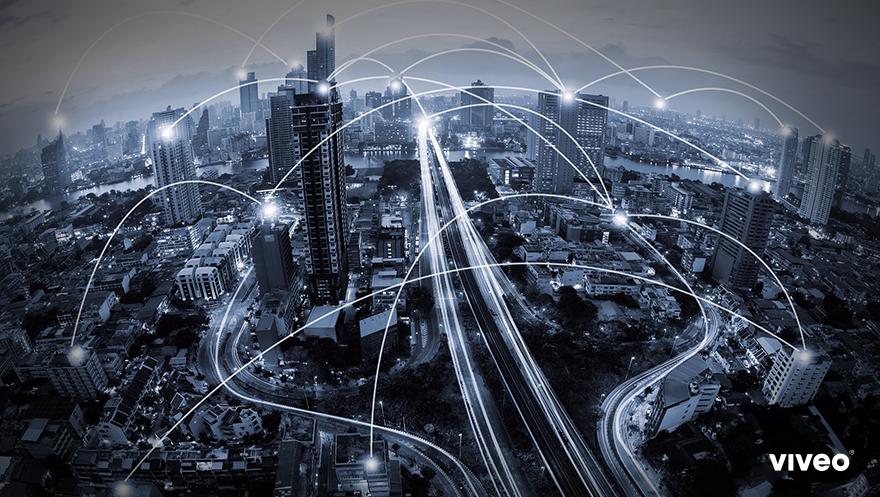
«Transport, security, emergencies, health, services such as water, electricity, internet access, are just some examples of where governments can create a ‘intelligent’ cities».
The evolution of «smart»
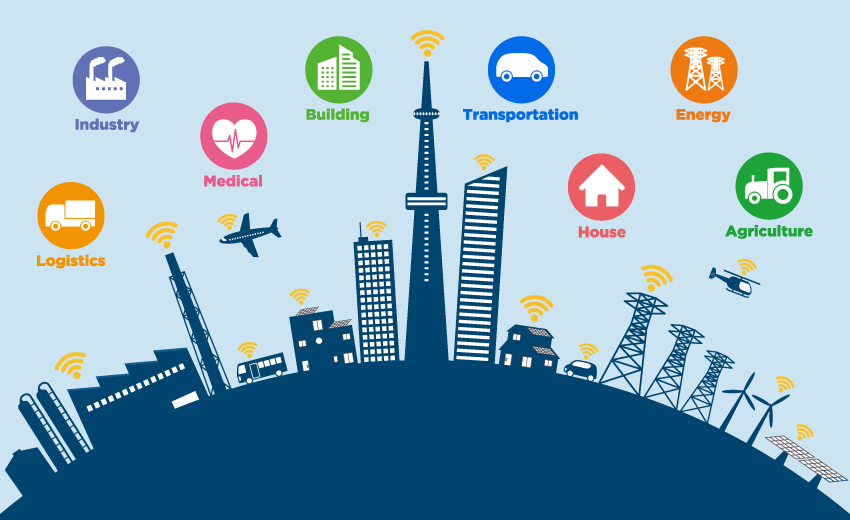
Internet has changed the way we work. First, it was communication, then industrial production and later devices that we use in everyday life such as televisions, washing machines, refrigerators, etc. This later trend, known as «Internet of Things» (IoT) appeared at the beginning of the millennium, using devices interconnected to networks that send and receive data packets triggering actions and decisions. The spaces where this technology was incorporated, such as factories or homes, are known as «smart».
Thanks to the benefits that IoT provides, such as significant energy savings, cost reduction, large network coverage, this technology has been massively incorporated into «smart industries» and «smart homes», and now is reaching entire cities, creating what is known as a «Smart City».
What is a Smart City
A city using IoT technology, can redefined its urban life by making it simpler, faster, more efficient and sustainable.
A «Smart City» is characterized mainly by interconnectivity. In it, Artificial Intelligence and IoT technology are incorporated into public services, businesses, companies, factories, etc. Devices connected to the internet and to each other, coordinate the operation of the entire city, reducing energy consumption and intelligently controlling production and supply. With the use of sensors and IoT, all parts of the infrastructure of a city can be managed in a “4.0” way.
More about 4.0 Transformation here
Transport, security, emergencies, health, services such as water, waste management, electricity, internet access, are just some examples of where city governments can innovate to create an “intelligent” city. Collecting data with these systems allows for more efficient responses and a greater and unified control of what happens in the city.
Building a Smart City
Today, 54% of the world’s population lives in urban areas and it is predicted that by 2050 it will reach 66%, according to data from a UN report. This is why governments and companies responsible for the provision of public services are using technology more than ever to ensure the efficiency and sustainability of cities that will increasingly concentrate population.
A clear example is the case of Barcelona, one of the leading “smart” cities. With an investment of 18 million Euros for installation and maintenance, the city government replaced street lighting in 200 streets for a smart LED lighting system that not only has the capacity to reduce energy consumption, maintenance costs and waste, but at the same time can improve the quality of light and therefore, the safety of public spaces. These devices detect movement, weather conditions and light conditions at different times of the day and respond in real time to these parameters by lighting, increasing brightness or lowering the intensity. The new system means a 50% saving in energy consumption which, translated into economic savings, allows to amortize the investment and to invest in applying this transformation in further spaces.
What benefit would it bring to our lives?
Thanks to technology, Smart Cities promote, among other advantages, new professions and job opportunities, a more agile administration and sustainable models that are more respectful with the environment.
Many cities seek larger participation which its citizens being part of decision making daily. Thanks to a new model of governance, which also promotes a more agile and accessible administration that avoids wasting time. Cities that connect with their citizens and better understand their needs can deliver positive change to everyone.
As mentioned before, one of the main benefit is efficient urban environments, in which resources are not wasted and where reuse is a key element, both from the point of view of health, and following the concept of ‘urban resilience’ or permanent adaptation to change. In addition, this concept of city promotes new models of production and consumption, as it promotes a Circuit Economy.
Tucumán, a «smart city»?
As in Barcelona, the leap towards a more intelligent city is occurring worldwide. Each city will create its own version of Smart City, because it is not about adapting to a prefixed scheme of technological changes, but about transforming its own infrastructure and the life dynamics, in a more technologically advanced, more efficient and simpler version, based on the interconnectivity of the Internet of Things.
In Tucumán (Argentina), urbanization measures based on smart technology are already being implemented. There are companies, SigFox for example, that have invested on the technological evolution on a global scale by installed their Internet of Things network, and now municipalities can become “smart’.
Viveo is developing devices that connect to the IoT network and that will soon be available to everyone in the province. The objective: to take a step towards the future.
Source: Forbes.